
Colbert County Criminal Court Cases
Colbert County is Alabama's 31st Judicial Circuit. The Colbert County Circuit Clerk keeps the local state trial-court file. Circuit Court hears felonies. District Court hears misdemeanors and traffic cases, and it conducts preliminary felony proceedings before a felony moves to Circuit Court. A municipal court has a narrower role. It hears ordinance violations and authorized misdemeanors that arise within its city jurisdiction.
This split matters because one event can touch more than one court. A felony may have an early District Court record and a later Circuit Court file. A city offense may remain with a municipal clerk. The case number, charging paper, and court name are stronger routing clues than the place where an arrest occurred. Colbert County criminal case records are court files, not a restatement of the jail roster.
Colbert County Court Levels Compared
The charge level helps identify the first Colbert County court to contact. It should be read from the charging instrument, not guessed from a brief booking label. Alabama law separates felony and misdemeanor classes, while court jurisdiction determines where the formal case proceeds.
| Court | Colbert County criminal work | Useful record clue |
|---|---|---|
| Circuit Court | Felony prosecutions and related final filings | Indictment, felony case number, judgment, sentence |
| District Court | Misdemeanors, traffic matters, and preliminary felony steps | Complaint, hearing entry, district case number |
| Municipal court | City ordinance cases and authorized misdemeanors | City court name, citation, municipal case number |
A District Court felony entry does not always contain the final outcome. If the matter was sent forward, check Circuit Court for the indictment, plea, judgment, or sentence. That second check prevents an early proceeding from being mistaken for the whole Colbert County criminal court case.
Searching Colbert County Case Records
Just One Look is Alabama's on-demand trial-court record channel. Alacourt provides subscription, read-only access to case details and images. The inspected public entry point was gated, so exact live fields and current charges could not be confirmed. Start with the identifiers already known, then use the Colbert County clerk when a search is incomplete.
- Choose the Alabama trial-court service and keep the court level in mind.
- Use a known case number first. If only a name and year are known, use the portal options that are actually displayed.
- Confirm that the result names Colbert County and the correct court before reading docket events.
- Follow later case links or numbers when a felony began with a preliminary District Court record.
- Ask the Circuit Clerk for a case-action summary, disposition, or certified copy when the online view is absent or not enough.
| Search detail | Verified status | Best next step |
|---|---|---|
| Case number | Useful clerk identifier | Provide it exactly if known |
| Name and filing year | Useful clerk identifiers | Use the live options shown or give both to staff |
| Exact portal input fields | Not verified because access was gated | Do not assume a date-of-birth or case-type filter exists |
| Images and older files | Remote completeness not promised | Request the document from the Colbert County clerk |
| Current online charge | Not verified in research | Review the live service before purchase |
Colbert Cases in Just One Look
Just One Look is a statewide trial-court service, so a searcher must still verify the county, court, and case number. A similar name is not enough. The docket should align with the charge, filing year, and court level that are already known. If a result stops before disposition, that can signal a linked file, later report, or incomplete remote image set.
The official Just One Look entry screen shows where an online Colbert County court search starts.
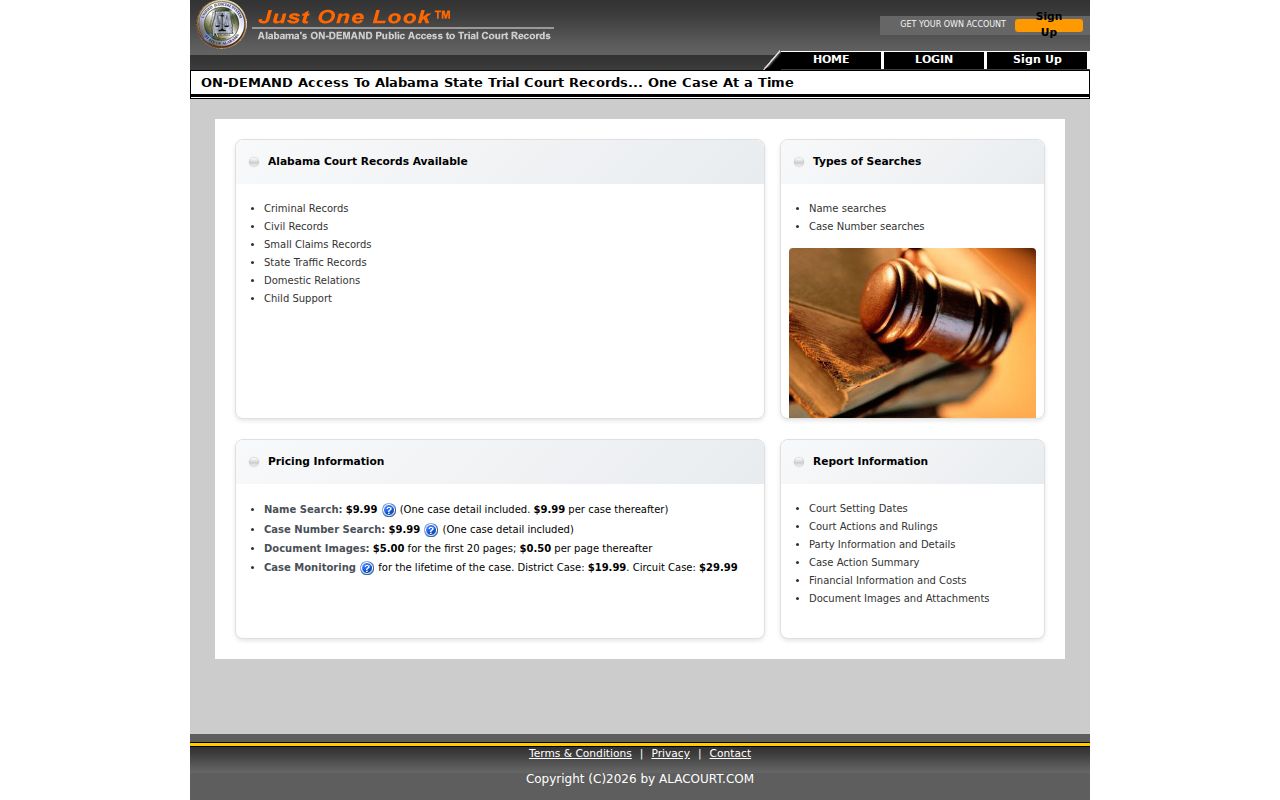
The interface is a starting point, while the clerk supplies a certified Colbert County court record when proof of the official filing is needed.
Inside a Colbert County Case File
A complete Colbert County criminal case file tracks the prosecution, not just the first allegation. The docket is the date-ordered list of events. The charging instrument states the filed accusation. A disposition states how the charge ended, and a judgment and sentence describe the result after a conviction. Some files may include motions, orders, costs, fines, restitution, or links to related cases.
| Case Number and Court | Identifies the file and the Colbert County court that controls it. |
|---|---|
| Charging Document | Shows the complaint, indictment, or other filed accusation and may identify the statute and class. |
| Docket Entries | Lists filings, hearings, motions, orders, and other case events in date order. |
| Hearing Dates | Records scheduled or completed court appearances when entered in the file. |
| Plea and Disposition | Shows the formal plea and whether a charge ended by conviction, acquittal, dismissal, or another recorded result. |
| Judgment and Sentence | May state punishment, costs, fines, restitution, and court-ordered conditions. |
Not every row or image will be public online. The court's privacy and confidentiality rules may restrict victim-sensitive, juvenile, Youthful Offender, expunged, or other protected material.
Choosing Colbert County Court Documents
A case-action summary is often the compact way to review the docket and outcome. A disposition focuses on how a charge ended. A certified copy carries the clerk's certification for a formal use. These products are not interchangeable, so the request should name the document and purpose as clearly as possible.
- Case-action summary
- A condensed court record of the case and its recorded events.
- Disposition
- The court's recorded outcome for a charge.
- Certified copy
- A copy authenticated by the public office that keeps the original.
- Docket
- The chronological list of filings, hearings, and orders in a case.
For an Alabama expungement filing, official instructions may call for certified criminal-history and court records. Ask the Colbert County clerk which local court document matches the filing packet. No accessible official local source published a current search or certification fee, so confirm the cost before ordering.
How a Criminal Case Moves
A Colbert County criminal court file changes as the case moves. The prosecutor's filed charge can differ from the language used at booking. Arraignment is the hearing where the charge is stated and a plea is taken. Pretrial entries may reflect motions, discovery, hearings, or negotiations. The case then reaches a plea or trial, a disposition, and, when there is a conviction, sentencing.
Case flow: Charges Filed › Arraignment › Pretrial › Plea or Trial › Disposition › Sentencing
The Alabama District Attorneys Association county directory identifies the elected prosecutor for Colbert County and the local office contact.
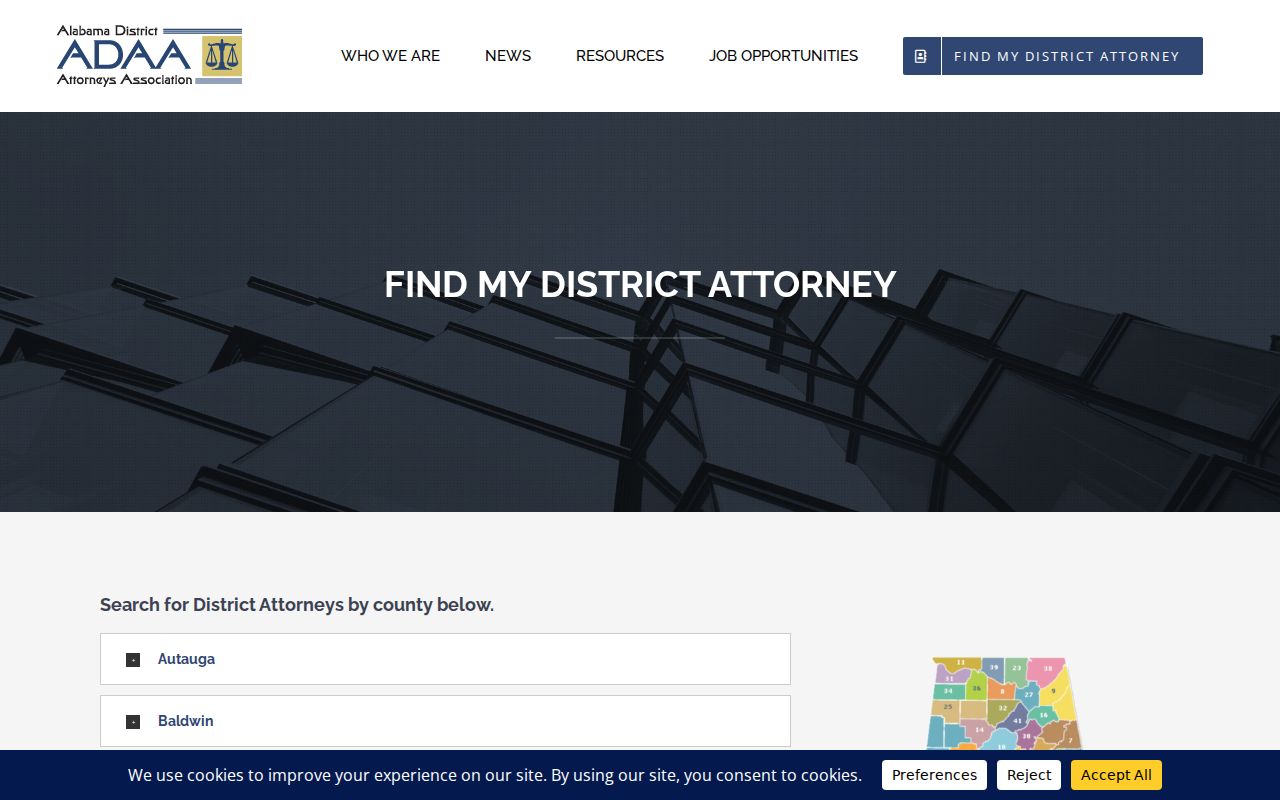
The prosecutor files and handles the state's case, but the Circuit Clerk remains the custodian for the court's docket and final record.
Colbert Booking Charges Can Change
A jail entry reflects the charge known at booking. It is an intake record, not the final Colbert County criminal court case. Prosecutors may file different charges, a grand jury may return an indictment or no-bill, and the court may dismiss a count or enter another disposition. A bond figure can also change after a court appearance.
When a booking record and a docket seem to conflict, match the booking date and number to the case number, then treat the clerk's filed charge and disposition as the court record. The broader Colbert County arrest lookup explains the custody record that comes before the case file.
Note: A booking label records an allegation at intake, while the Colbert County court file shows the charge actually prosecuted.
Case Record Access & Restrictions
Alabama's public-writings rule in Ala. Code §36-12-40 supports inspection and copying of public writings unless another law makes material confidential. Court access is still record-specific. Juvenile and Youthful Offender matters, victim-sensitive details, expunged files, and other protected data may be withheld, redacted, or absent from a remote view.
Expungement adds another access limit. An Alabama court, not ALEA, grants relief under chapter 15-27. The filing process can require certified ALEA criminal history plus a certified arrest record, disposition, or case-action summary. Once a qualifying order is entered, court and agency records are handled under the statute's restrictions and exceptions. The current local filing fee was not found in an accessible Colbert County source.
If a Colbert County criminal case does not appear online, contact the Circuit Clerk at 201 North Main Street, Tuscumbia, Alabama 35674. The clerk's number is 256-386-8511, and published hours are 8:00 a.m. to 4:30 p.m. Monday through Friday. Give the case number, name, and year if known. Ask for inspection, a case-action summary, a disposition, or a certified copy rather than a vague background search.
Colbert County Circuit Clerk
201 North Main Street
Tuscumbia, AL 35674
256-386-8511
Monday through Friday, 8:00 a.m. to 4:30 p.m.
Note: Confirm copy availability and fees with the clerk because accessible official Colbert County sources did not publish them.
Colbert Clerk Completes Case Searches
The clerk is the fallback when an older Colbert County file, linked felony case, certified disposition, or remote image is missing. A focused request works best. Identify the court, approximate year, name, and case number if possible. Then state whether the goal is to inspect the file or obtain a specific copy.
The Alabama court privacy rules govern what can be released at a public counter. A missing online result does not prove that no case exists, and a partial docket does not prove that no later disposition was entered. Direct clerk review closes those gaps without inventing search fields, fees, or remote coverage that the official sources do not promise.
The counter sits within a courthouse records hub with deep local history. Construction began in 1881 and finished in 1882. The building was rebuilt with a clock tower in 1909, expanded north in 1948, and gained a new wing during the 1970s. Those dates explain why older Colbert County criminal court records may span changing storage eras, but the clerk remains the right starting custodian.